Last updated
A living page. What I’m building, chewing on, and where I actually am — updated when the season shifts.
Shipping
This site. Narrative essays at the intersection of agentic engineering, marketing, and coaching, shipped on a Sage 11 / Tailwind 4 / Vite 8 stack I wrote mostly with Claude in the loop. The infrastructure is as much the work as the writing.
A new version of an online magazine, built on a fresh approach: a Claude-Design-and-Google-Stitch loop driving the design surface, not just the code under it — Stitch roughing the UI, Claude refining and wiring it. What makes me confident about where it lands is the workflow itself; there’s so little ceremony between intent and screen that the templates accumulate faster than I expected, and a process that straightforward tends to converge somewhere good regardless of the output. The endgame is roughly thirty templates in production — the full prototype.
A brand site for a SaaS company I work with — Next.js 15, React Server Components, Tailwind v4, shipped on AWS Amplify. Different substrate from this one (WordPress + Sage 11 + PHP 8.5 on shared hosting), same Claude-in-the-loop rhythm. Current beat: adding new pages and rolling the site out into more language versions — DeepL on the prose, Claude Code on everything around it, because the friction is rarely the words, it’s the dozen surrounding files (route segments, metadata, OG tags, structured data) that quietly need to know about each new locale. Two small lessons from running both stacks in parallel: the agentic workflow transfers cleanly — the bottleneck is rarely the framework — and context-switching between WP pages and React server components in a single day clarifies the grain of each in a way neither one’s docs can. More when the brand goes public.
A Vercel-ready successor to StackEdit — the old-guard browser Markdown editor, dormant upstream since May 2023 — now on Vite 7.3 with a hardened CSP, DOMPurify wiring, and a 353-test safety net (Vitest 4). The TypeScript migration landed: every @ts-nocheck gone, all of api/ and src/services/ ported to a type-checked surface. Recent beat: a CodeMirror 6 pass — scroll-sync rewrite, line decorations and front-matter, plus in-preview anchor/TOC links that now actually scroll to their section. Apache-2.0, attribution to Benoit Schweblin intact. 5.16.0.
A Claude Code / Cowork plugin for pre-purchase property due-diligence — paste an address (or a Rightmove URL), get a dated, confidence-labelled brief on tax, rental yield, mortgage access, visa pathway, and 35 other facets per address — 39 user-invocable sections plus four cross-cutting layers in all. 103 countries covered, every claim sourced from primary government data and date-stamped, with a regulatory-watch that flags reforms before they stale it. The bet underneath it: agentic engineering’s next interesting frontier isn’t software that writes software, it’s collapsing the research scaffolding around six- and seven-figure decisions — buying a house in another country is a clean test case, because the friction is almost entirely “you don’t know which thirty government pages to read.” MIT, CalVer, currently 2026.05.17.
A one-click webpage screenshotter I built for my own workflow — .snapframe, Playwright-backed, with social presets, multi-viewport batch, and full-page PDF baked in. The recent beat is a headless CLI (snapframe <url> -o shot.png), which is the shape I actually reach for now — agent loops and CI pipelines want a picture on demand, not a browser tab. MIT.
A no-credentials Reddit fetcher I built for my own research loop — hot / search / thread over Reddit’s public JSON, automatic RSS fallback, zero dependencies, stdlib only, rate-limit-aware backoff. It exists because Reddit’s API app creation has been silently gated for the better part of two years: fill the form, solve the CAPTCHA, click create, nothing happens, no error. So I stopped waiting for credentials and read the public surface instead. The file is a single symlink shared with a Claude Code skill, so any agent session can pull a thread or a subreddit’s sentiment with no setup — the part I actually reach for daily. Same bet underneath it as the property tool: the interesting frontier isn’t software that writes software, it’s collapsing the research scaffolding around a decision — and for reading a field in real time, the honest signal is in the threads, not the press releases. An authenticated PRAW path is already scaffolded for the day the API un-gates; nothing else changes when it does. Stdlib only, not yet public.
Research
A paper I’m writing on the side, Intent Entropy — an attempt to put a number on something I kept hitting while generating interfaces with agents: when you hand a model an API contract and ask it for a screen, how much of what comes back is guessing? The contract says a field is a currency amount; it never says whether that should be a text input, a stepper, a slider, or a read-only badge. Every gap like that is a decision the contract never made. Think of the API as sheet music — it fixes the notes, but the performance is still open — and the paper measures, in bits, how much room each field leaves for the performance to matter.
The finding surprised me, because it refuted my own opening guess. I went in assuming admin and CRUD screens would be the boring, low-freedom case — and the data said the opposite: admin was the ceiling, not the floor. What actually predicts the freedom is the convention strength of the data type. A date renders one way across every design system I checked; a currency or a multiselect stays wide open, because the field’s own convention hasn’t settled yet. That turns out to be exactly where a human still beats the autogenerated default — not on the fields everyone already agrees on, but on the ones no convention has decided. I’m keeping the wrong guess in the paper rather than tidying it away; the refuted hypothesis is half the point.
Reading & thinking
Less reading than thinking, honestly. The questions I keep circling: where LLMs actually are in six months — not the straight-line extrapolation everyone draws — whether this architecture is near its endgame or just plateauing before the next shape arrives, and what a world where software gets written in conversation means for the people in the middle.
One thing I keep noticing: LinkedIn has filled up with “vibe coders” — a feed performing the transition more than living it, every other post a confident thread about a workflow nobody’s run for longer than a week. It’s a useful signal in the negative: when the performance layer gets this loud, the honest one has usually moved somewhere quieter. So I’ve been reading Reddit instead — r/ExperiencedDevs, r/cursor, the threads where people admit what actually broke — and built a small tool to pull those discussions straight into the session rather than through a browser tab. The texture of a field is in the comments people write when they’re not building a personal brand.
Grazing across posts, papers, and leaked system prompts. The long-form hasn’t caught up to the field yet, and the field won’t wait for it.
Cross-training across tools
Running real tasks through Cursor and OpenAI’s Codex alongside Claude Code — partly because the field moves fast enough that brand loyalty is a tax, partly because you can only see the shape of a tool clearly once you’ve held its alternatives. Tentative read: Cursor’s strength is the IDE surface and inline-edit speed, not the long-horizon agent loop. Codex is the inverse — a cleaner agent loop, less editor scaffolding, more “say what you want and walk away.” Each one teaches me where the actual leverage in agentic coding lives — and which parts of my Claude-in-the-loop habits transfer cleanly versus which were just Claude Code’s affordances dressed up as universal lessons.
One thing none of the others come close to, though: the vibe. Claude Code has a personality — curious, dry, willing to push back, oddly companionable across a long session — and the others don’t. Whatever Anthropic did to make it feel like working with a colleague rather than commanding a tool is the part I’d miss most, and I don’t think it’s something the others stumble into by accident.
The closest analog I can find: an old dev buddy of mine — very focused, sometimes scary, very reliable. That’s the texture. The others don’t have one.
Where I am
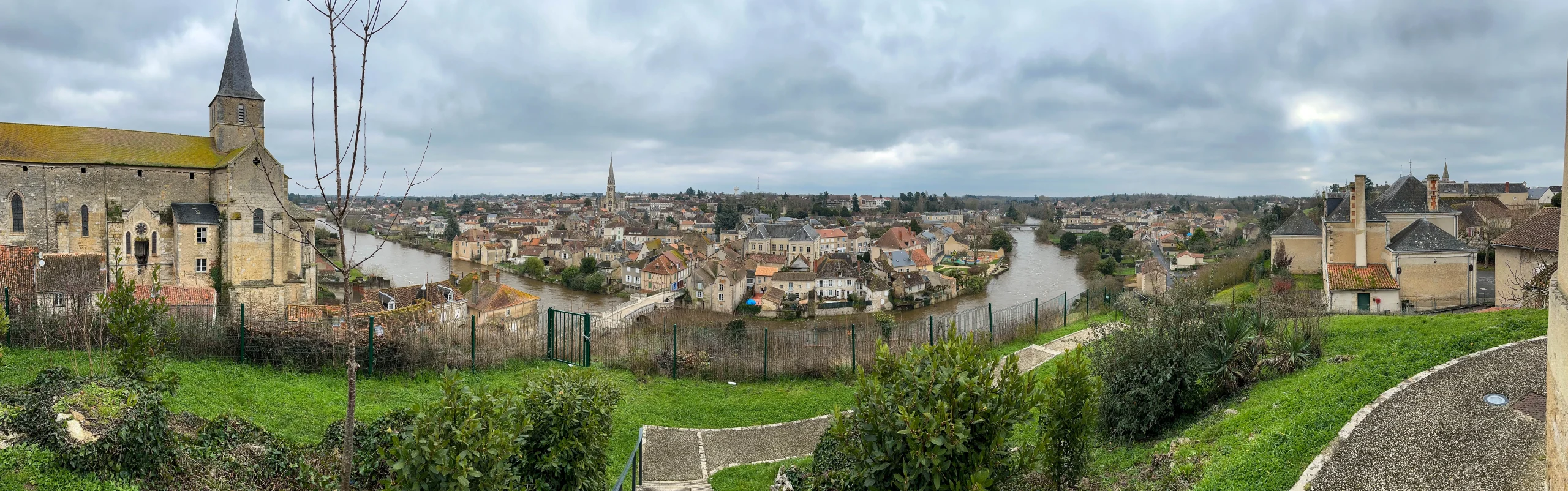
France, mostly, these days. West Slovakia when the shuttle runs the other way — and the slow trip between the two is still, quietly, where most of the real thinking gets done. Available via email for anything that survives a one-paragraph explanation.
Not doing
Not watching TV. Otherwise not much on the “no” list right now — I’m in open-learning mode on agentic engineering, saying yes to most things that teach me something. The curation comes back when the ground settles.
Inspired by /now pages — one page, updated when life shifts.